

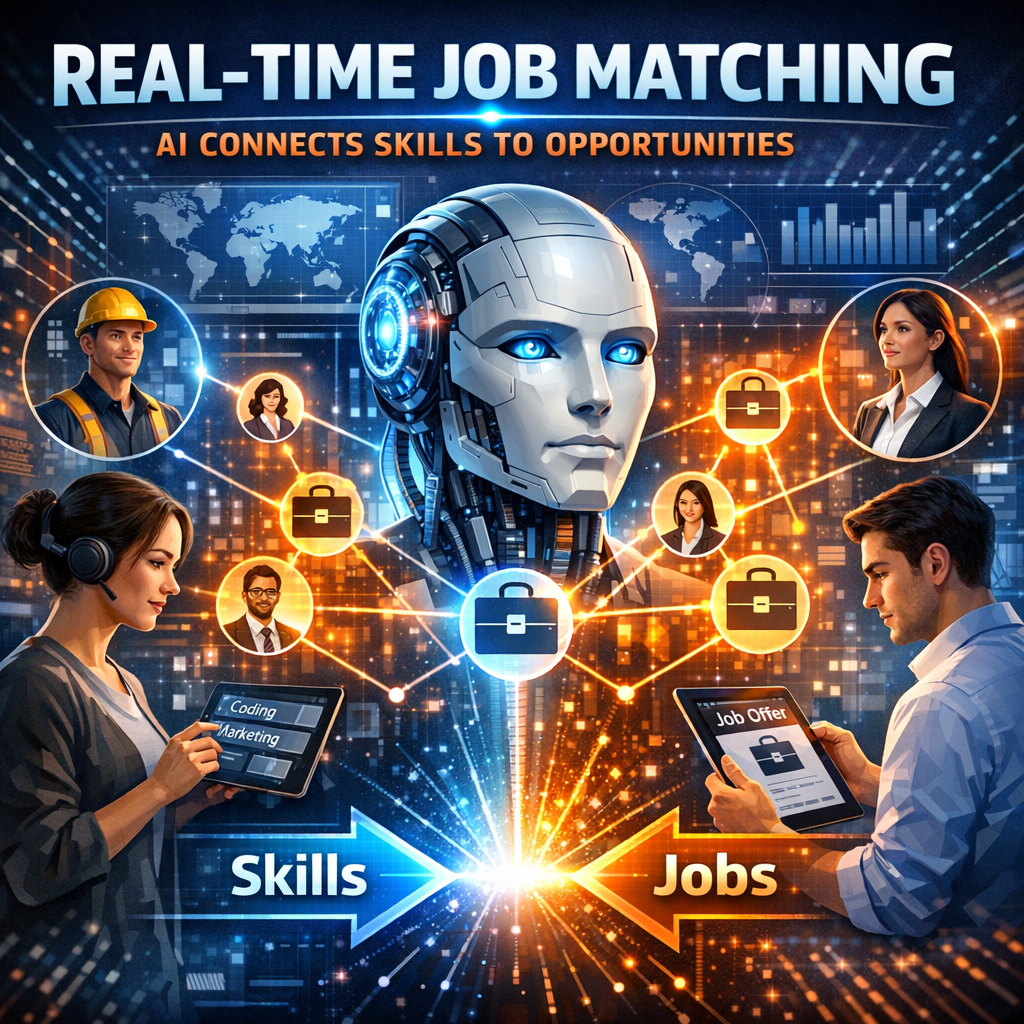
Real-Time Job Matching: AI Connects Skills to Opportunities
title: “Real-Time Job Matching: How AI Connects Verified Skills to the Right Opportunities”
date: 2023-12-07
author: Expert Content Writer
Introduction to Real-Time Job Matching
In today’s rapidly evolving job market, finding the right fit between job seekers and positions is more critical than ever. Traditional methods of job matching can be slow, often leading to mismatches that cost both employers and employees time and resources. However, advancements in Artificial Intelligence (AI) have paved the way for real-time job matching, a technology that effectively aligns verified skills with the right job opportunities.
The Role of AI in Job Matching
Artificial Intelligence has transformed many industries, including recruitment. AI-powered platforms can analyze vast amounts of data from resumes, job descriptions, and other relevant sources to identify the best matches between job seekers and open positions. Here are some ways AI contributes to effective job matching:
Comprehensive Data Analysis
- Resume Parsing: AI algorithms can quickly parse through resumes and extract crucial information such as educational background, work experience, and skills.
- Skill Verification: Modern AI tools can verify the authenticity of the skills listed by candidates, ensuring that they match the requirements of the job.
- Behavioral Analysis: AI can even analyze candidates’ behavior patterns during assessments to predict job performance.
Enhanced Matching Accuracy
- Semantic Matching: Unlike keyword-based searches, AI uses semantic search technology to understand the context behind terms used in job descriptions and resumes, leading to more accurate matches.
- Predictive Analytics: AI can use historical data to predict future job performance and how well a candidate will fit into a company culture.
Benefits of Real-Time Job Matching
Adopting real-time AI-driven job matching offers numerous benefits for both employers and job seekers:

For Employers
- Reduced Hiring Time: AI speeds up the recruitment process by automating the initial screening of candidates.
- Improved Quality of Hire: With AI, employers get more accurate matches based on verified skills, reducing the risk of poor hires.
- Cost Efficiency: Less time spent on sifting through applications means cost savings in the recruitment process.
For Job Seekers
- Increased Job Accessibility: AI-powered platforms can suggest vacancies that candidates might not have considered but are well-suited for.
- Fair Assessment: By focusing on skills and proven abilities, AI helps reduce unconscious bias in hiring.
- Personalized Job Recommendations: AI algorithms can learn from candidates’ past job applications and successes to tailor future job suggestions.
Challenges and Considerations
While the benefits are significant, there are challenges and ethical considerations in implementing AI in job matching:
- Data Privacy: Sensitive personal information handled by AI systems must be protected against breaches.
- Bias in AI: If not properly trained, AI systems can perpetuate existing biases, although they are fundamentally designed to minimize bias.
- Regulatory Compliance: Companies must ensure that their AI systems comply with employment laws and regulations.
The Future of Job Matching
As we look to the future, AI’s role in job matching is likely to grow only stronger, with more sophisticated algorithms and broader adoption industry-wide. This evolution will continue to enhance the efficiency of job markets, contributing to a more dynamic and responsive workforce.
Conclusion
AI-powered real-time job matching represents a significant step forward in connecting job seekers with suitable job opportunities. By harnessing the power of AI to verify skills and automate the matching process, both employers and employees can look forward to a more efficient and fulfilling employment landscape. As technology advances, it will be crucial to address the challenges and ensure that real-time job matching serves as a beneficial tool for all participants in the job market.



I appreciate how the AI Job Applier from Undetectable.ai simplifies many of the repetitive tasks involved in applying for jobs.