
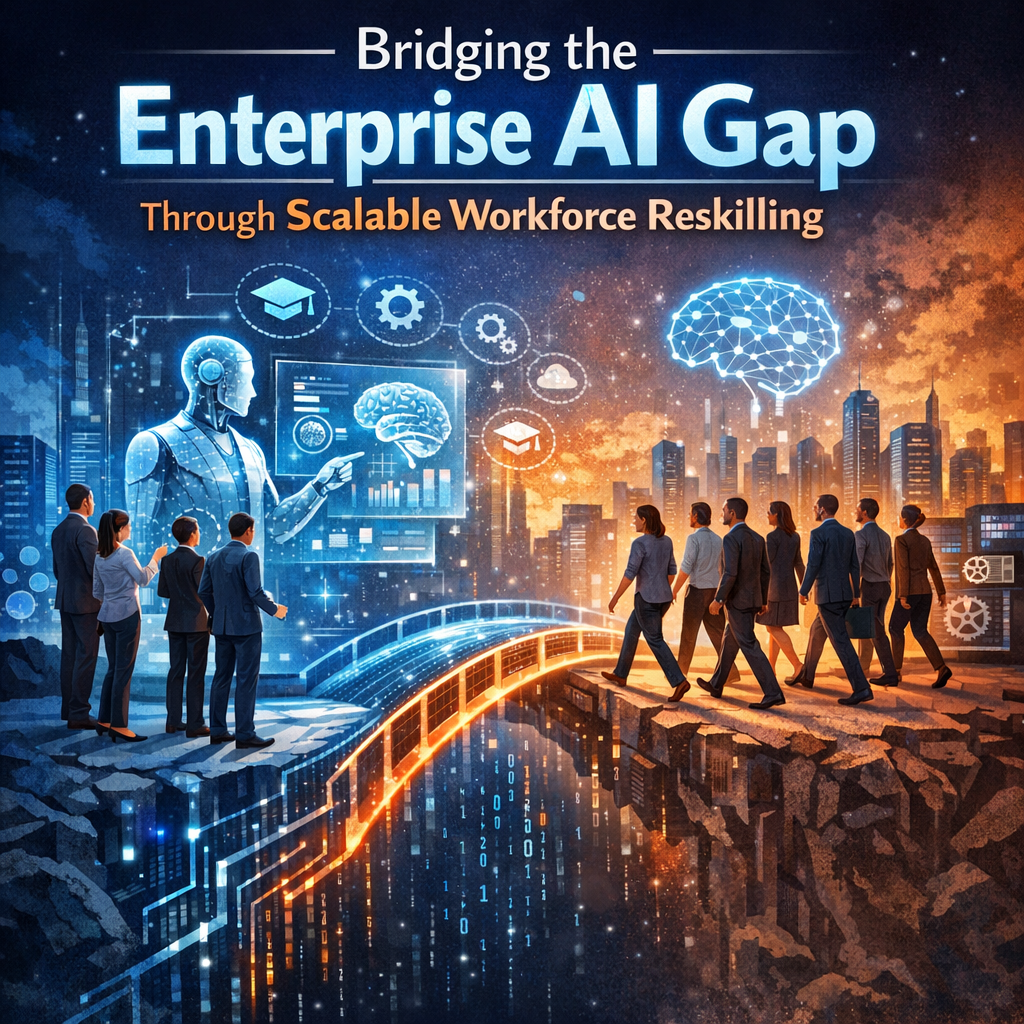
Bridging the Enterprise AI Gap Through Scalable Workforce Reskilling
Bridging the Enterprise AI Gap: How Companies Are Reskilling Teams at Scale
Artificial intelligence is moving quickly from experimentation to everyday business use. Companies are applying AI to customer service, software development, research, operations, and decision-making. Yet buying new tools does not automatically create better results. Employees need the skills and confidence to use them responsibly and effectively.
This gap between AI’s potential and an organization’s ability to apply it is the enterprise AI gap. Closing it takes more than a one-time training session. It calls for a practical, ongoing approach to reskilling teams across roles and departments.
Why AI Reskilling Matters
AI is changing tasks, not just job titles. Employees may need to review AI-generated work, write effective prompts, verify information, protect sensitive data, or redesign workflows. These responsibilities often fall to people who were not previously expected to work with AI.

Without preparation, teams may use tools inconsistently, overlook risks, or avoid them altogether. Employees may also worry that AI will replace their roles, making clear communication an essential part of any skills program.
Reskilling helps organizations turn AI from a technology investment into a useful workplace capability. It can also give employees a clearer understanding of how their expertise complements automation.
Build Training Around Real Work
Effective programs start with the work people actually do. A generic introduction to AI may help employees understand basic concepts, but it rarely shows them how to apply those concepts to daily responsibilities.
Companies can begin by identifying tasks where AI could assist, such as summarizing documents, drafting routine communications, analyzing data, or supporting customer inquiries. Then they can tailor learning to different teams.
Create Role-Based Learning Paths
Not every employee needs the same level of technical knowledge. A useful program might include:
- Foundational skills: AI basics, limitations, and responsible use for all employees.
- Role-specific practice: Workflows and tools relevant to departments such as marketing, finance, or human resources.
- Advanced capabilities: Data, automation, and AI development skills for technical teams and specialists.
- Leadership training: Guidance on governance, workforce planning, and measuring business impact.
This approach keeps training relevant while giving employees a shared understanding of responsible AI use.
Make Learning Practical and Ongoing
People build confidence by practicing. Workshops, guided exercises, and team pilots can help employees test AI tools in low-risk settings and discuss what works. For example, a team might compare an AI-generated draft with a human-written version, identify errors, and refine its review process.
Reskilling should also continue as tools and policies change. Short learning modules, peer demonstrations, and internal knowledge-sharing sessions can keep skills current without pulling employees away from their work for extended periods.
Managers play an important role. When leaders make time for experimentation and recognize thoughtful use—not simply the number of tools adopted—employees are more likely to participate. Teams should also have clear ways to ask questions and report concerns.
Pair Skills With Clear Guardrails
Training is most effective when employees understand what they can and cannot do. Organizations should explain how to handle confidential information, check AI-generated content, disclose AI use where appropriate, and escalate uncertain cases.
Guardrails should be practical and easy to find. If policies are too vague, employees may hesitate or improvise. If rules are too restrictive, teams may miss useful opportunities. Regular reviews can help companies adapt guidance as tools, regulations, and business needs evolve.
Measure Progress Beyond Course Completion
A completed course does not necessarily mean an employee can apply new skills. Companies should evaluate whether training is improving work and supporting safe adoption.
Useful measures may include:
- Employee confidence and skill assessments
- Time saved on selected tasks
- Quality and accuracy of AI-assisted work
- Adoption across relevant teams
- Compliance with privacy and review practices
- Employee feedback about workflow changes
These indicators can reveal where additional coaching or clearer processes are needed. They also help leaders distinguish meaningful outcomes from activity that merely looks like progress.
Treat Reskilling as a Business Capability
Bridging the enterprise AI gap is not a one-off technology project. It is an ongoing investment in people, processes, and responsible decision-making. Companies that connect role-based learning with hands-on practice, clear guardrails, and measurable outcomes are better positioned to make AI useful across the organization.
Most importantly, reskilling should help employees see a place for their judgment and experience in an AI-enabled workplace. When people understand how to work alongside these tools, organizations can move beyond experimentation and build capabilities that last.