
Complete Guide to Earning a Recognized AI Certification
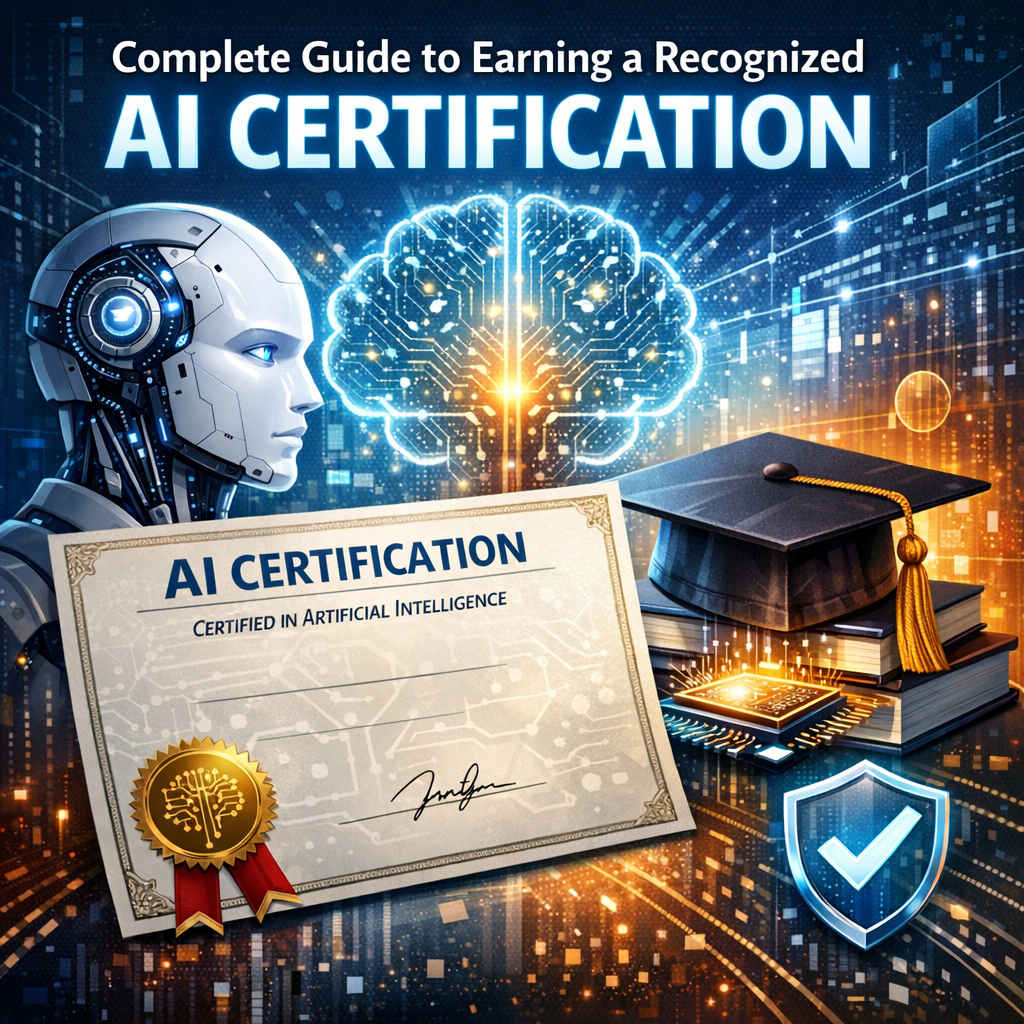
The Complete Guide to Earning a Recognized AI Certification
Artificial intelligence skills are increasingly valuable across technology, business, healthcare, finance, and other fields. An AI certification can help you build structured knowledge, demonstrate practical skills, and show employers that you have invested in professional development.
But certifications vary widely. Some are backed by established technology providers or universities, while others offer little more than a completion badge. Use this guide to choose a credible program and make the most of your effort.
What Does “Recognized” Mean?
A recognized AI certification is one that employers, industry professionals, or academic institutions understand and consider relevant. Recognition may come from the organization issuing the credential, the rigor of its assessment, or its connection to widely used tools and practices.

There is no single authority that approves every AI certification. Before enrolling, check whether the program:
- Is offered by a reputable university, professional association, or technology provider
- Assesses skills through an exam, project, or practical lab
- Clearly explains its curriculum and prerequisites
- Has a verifiable credential or certificate
- Matches the roles and technologies you are targeting
A well-known name can add credibility, but it is not a substitute for useful learning or hands-on experience.
Choose a Certification That Fits Your Goals
Start by identifying what you want to do with AI. The right credential for a software engineer may be very different from the right one for a business analyst or project manager.
Match the Subject to Your Career
Common areas of AI study include:
- AI and machine learning foundations: Core concepts, model types, and responsible AI
- Generative AI: Large language models, prompt design, and generative applications
- Cloud AI platforms: Building and deploying AI solutions with a specific provider’s services
- Data science and machine learning engineering: Data preparation, model training, evaluation, and deployment
- AI product management: Use-case selection, risk assessment, and implementation planning
Look at job listings for the roles you want. Note which skills, platforms, and credentials appear repeatedly, then use that information to narrow your options.
Check the Requirements
Some programs are designed for beginners, while others assume experience with programming, statistics, data analysis, or cloud computing. Review prerequisites before paying for a course or exam.
If you are new to the field, start with foundational material. A beginner-level certification can provide structure, but it may not cover enough depth for an advanced technical role. Conversely, an advanced exam can be an inefficient first step if you lack the necessary background.
Compare Programs Before You Enroll
Read the syllabus and assessment details carefully. A course that focuses only on terminology may not prepare you to apply AI at work. Strong programs typically combine conceptual knowledge with practical activities, such as analyzing datasets, evaluating models, or building a small application.
Consider these questions:
- What will you be able to do afterward? Look for specific learning outcomes rather than broad promises.
- How is knowledge assessed? A proctored exam, portfolio project, or hands-on lab can provide stronger evidence than attendance alone.
- How current is the content? AI tools and practices change quickly, so check when the material was last updated.
- What are the total costs? Include course fees, exam fees, retakes, and any required software or cloud usage.
- Can employers verify the credential? A digital credential with a public verification page is useful for resumes and professional profiles.
Prepare for the Exam and Build Real Skills
Once you choose an AI certification, create a realistic study plan. Divide the syllabus into topics, set weekly targets, and leave time for review and practice. Short, consistent study sessions are usually easier to maintain than last-minute cramming.
Use a mix of learning methods:
- Follow the official course or exam guide.
- Take notes on unfamiliar concepts and revisit them regularly.
- Complete practice questions to identify knowledge gaps.
- Apply concepts in a small project using appropriate tools.
- Review responsible AI topics, including privacy, bias, transparency, and security.
A practical project can make your learning more memorable. For example, you might build a simple classifier, test a generative AI workflow, or compare model outputs using a clear evaluation method. Keep the project appropriately scoped and document your process, choices, and limitations.
Take the Exam and Share Your Achievement
Before exam day, confirm the format, identification requirements, testing rules, and technical setup. Use official practice materials where available, and avoid relying on exam dumps or unauthorized answer banks. These may violate exam policies and leave you unprepared to use the skills in practice.
After earning your credential, present it accurately. Add the certification to your resume or professional profile, including the issuer and completion date. If possible, link to a verification page. Pair it with a project or work example that shows how you applied what you learned.
Keep Your Knowledge Current
An AI certification is a milestone, not a permanent measure of expertise. Tools, regulations, and best practices evolve, and some credentials require renewal. Follow developments in your area, revisit foundational concepts, and continue practicing with real problems.
The best AI certification is one that is credible, aligned with your goals, and supported by meaningful learning. Choose carefully, prepare actively, and use the credential as a starting point for building skills you can demonstrate in your work.