
How Enterprise-Grade AI Certification Helps Top Candidates Stand Out
How Enterprise-Grade AI Certification Sets Top-Tier Candidates Apart
As artificial intelligence becomes part of everyday business operations, employers need more than candidates who can explain what machine learning is. They need professionals who can apply AI responsibly, work with real-world systems, and understand the risks that come with deploying them.
That is where enterprise-grade AI certification can make a difference. A rigorous certification signals that a candidate has developed practical skills and understands how AI works within the wider context of business, security, governance, and teamwork.
Beyond Basic AI Knowledge
Online tutorials and introductory courses can help people explore AI, but they do not always show whether a learner can apply that knowledge in a professional setting. Enterprise environments are complex: data may be sensitive, systems must be reliable, and decisions can affect customers, employees, and entire organizations.

A strong certification program addresses these realities. It may assess whether candidates can:
- Choose appropriate AI tools for a business problem
- Evaluate model outputs rather than accepting them at face value
- Recognize privacy, security, and bias risks
- Communicate limitations to technical and nontechnical teams
- Follow responsible practices for testing and deployment
These capabilities set certified candidates apart from those whose experience is limited to experimentation.
What Makes a Certification “Enterprise-Grade”?
Not all AI credentials carry the same weight. An enterprise-grade certification is designed around the demands of real organizations rather than theory alone. Its value depends on the quality of its curriculum, assessments, and connection to current workplace practices.
Practical, Applied Assessment
Top-tier programs ask learners to demonstrate their skills. Depending on the subject, that might involve analyzing a use case, working through an implementation scenario, or explaining how they would evaluate an AI system. Applied assessment provides stronger evidence of capability than course completion alone.
Security and Governance Awareness
Organizations must consider how AI systems use data, how outputs are reviewed, and who is accountable for decisions. Certified candidates who understand governance and security can contribute to safer projects from the beginning. They are better prepared to ask questions about data access, oversight, and potential harm.
Alignment With Business Needs
AI is useful when it solves a meaningful problem. Strong certification pathways help candidates connect technical choices to business goals, such as improving service, supporting research, or streamlining a process. This perspective helps teams avoid adopting tools simply because they are new or popular.
Why Employers Value Certified Candidates
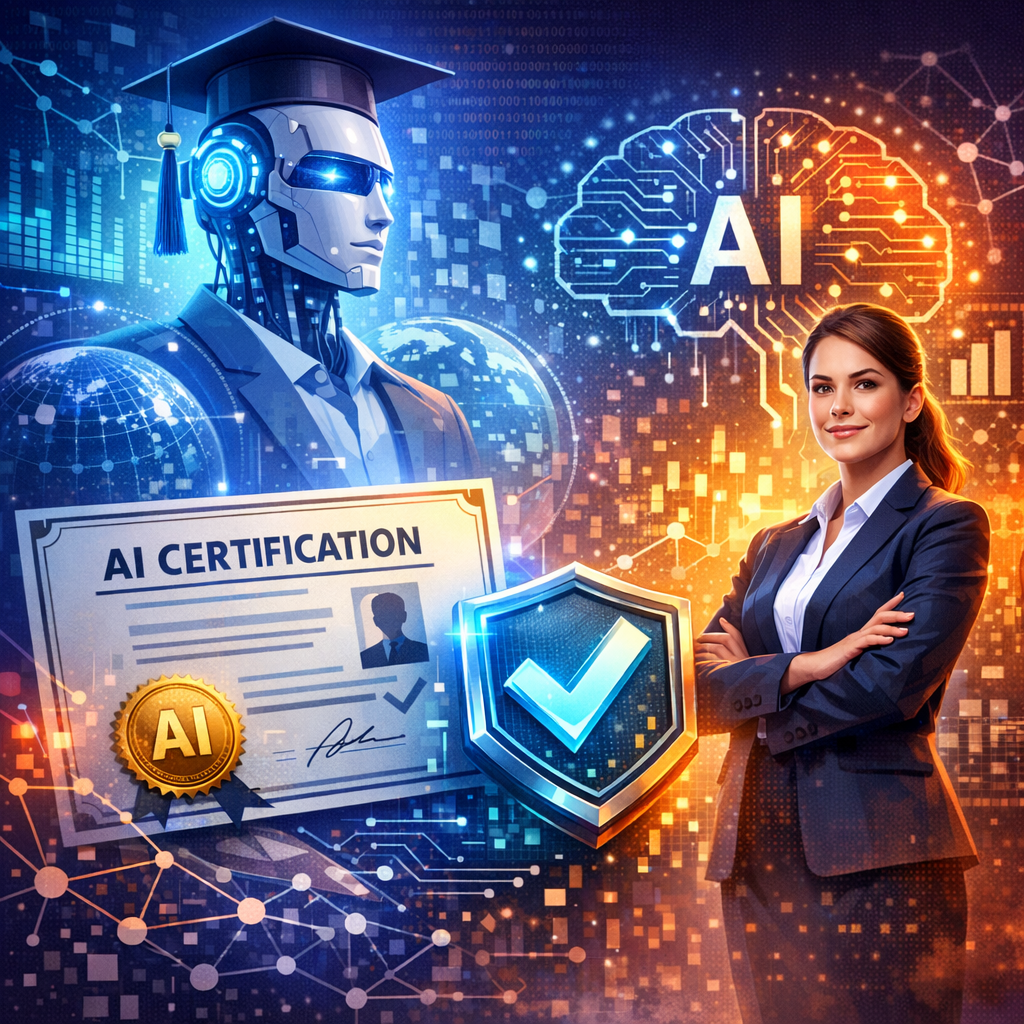
A certification is not a guarantee of expertise, and it does not replace relevant work experience. Still, it gives employers a clearer signal when reviewing applicants. A recognized credential can show that a candidate has followed a structured learning path and met defined standards.
It can also reduce uncertainty during hiring. Employers may use certification as one way to identify people who are prepared to contribute to AI projects, particularly when job titles and skill requirements vary widely across the industry.
For candidates, certification offers a way to demonstrate initiative and make skills more visible. This can be especially helpful for professionals moving into AI-related work from fields such as operations, marketing, finance, or customer support.
The Human Skills Still Matter
Technical knowledge is only part of effective AI work. The strongest candidates pair it with sound judgment, clear communication, and curiosity. They know when to trust an AI-generated result, when to verify it, and when to involve a subject-matter expert.
They can also explain AI capabilities without overstating them. In a business setting, that matters: teams need realistic expectations to make good decisions about tools, timelines, and risk.
Enterprise-grade AI certification can reinforce these habits by placing technical learning in a practical context. It helps candidates show not only what they know, but how they approach the challenges of using AI at work.
Choosing a Certification That Stands Out
Candidates should look beyond the credential’s name. Before enrolling, consider whether the program:
- Covers practical applications as well as core concepts
- Includes meaningful assessment rather than attendance alone
- Addresses responsible use, privacy, and security
- Is relevant to the roles or industries being targeted
- Clearly explains its requirements and learning outcomes
A carefully chosen credential can support a broader professional portfolio, alongside projects, experience, and ongoing learning.
A Stronger Signal in a Competitive Market
As more professionals add AI to their skill sets, employers will look for evidence that distinguishes familiarity from readiness. Enterprise-grade AI certification can provide that evidence by demonstrating structured learning, applied understanding, and awareness of organizational responsibilities.
The best candidates do not rely on a certificate alone. They combine it with practical experience and the judgment to use AI thoughtfully. Together, those qualities help professionals stand out—and help organizations build teams prepared to turn AI capabilities into dependable results.