
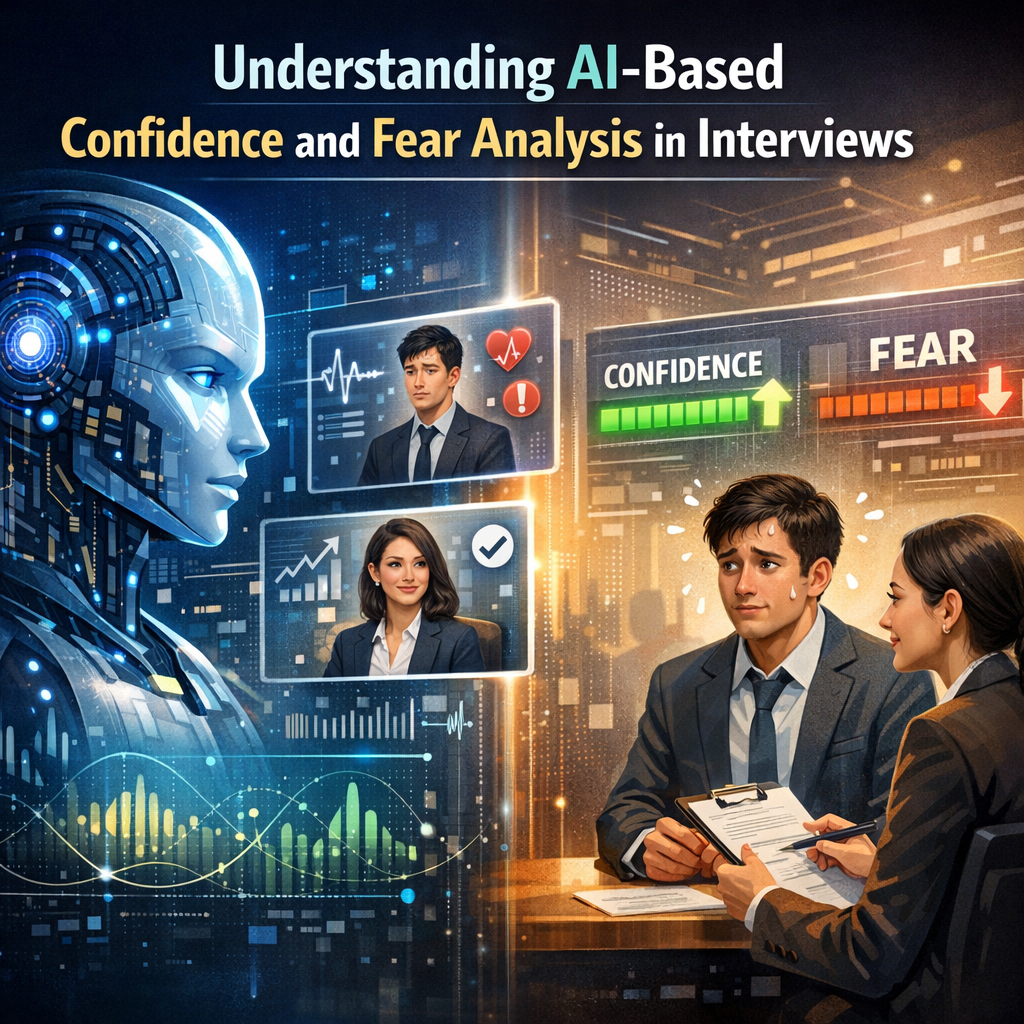
Understanding AI-Based Confidence and Fear Analysis in Interviews
The Science Behind AI-Based Confidence & Fear Analysis in Interviews
In today’s technology-driven world, artificial intelligence (AI) has become a critical tool in many sectors, including recruitment. Among the most intriguing uses of AI in this field is in analyzing candidates’ confidence and fear during interviews. This advanced technique aids employers in making more informed hiring decisions by assessing not just what candidates say, but how they say it.
How AI Analyzes Confidence and Fear
AI-driven systems use complex algorithms to track and interpret various human behaviors and physical reactions during an interview. Here’s a deeper look into how these systems function:
Facial Expression Analysis
Facial expression recognition technology evaluates subtle changes in a candidate’s face. For example, raising eyebrows may indicate surprise, while furrowed brows can suggest confusion or concentration. AI interprets these cues to gauge how confidently or nervously a person is responding to questions.

Speech and Tone Analysis
AI tools analyze speech patterns, including tone, pitch, pace, and volume. Steady, clear articulation might be seen as a sign of confidence, whereas frequent hesitations and a shaky voice could signal fear or uncertainty.
Body Language
Even through video interviews, AI can assess body language. Open, relaxed postures often denote confidence, whereas crossed arms, fidgeting, or excessive nodding might indicate nervousness or defensive behavior.
Benefits of AI in Analyzing Confidence and Fear
Employing AI for emotional analysis during interviews offers several advantages:
- Enhanced Objectivity: Human interviewers can have biases, sometimes subconscious. AI provides an unbiased tool that strictly analyzes based on predefined parameters.
- Consistency: While different interviewers might have varying interpretations, an AI system ensures that every interview is assessed using the same criteria, fostering fairness in the recruitment process.
- Deeper Insights: Beyond qualifications and experience, understanding a candidate’s emotional response provides a fuller picture of their suitability for a role, particularly in high-stress environments.
Ethical Considerations
With great power comes great responsibility, and the use of AI in emotional analysis is not without its ethical challenges:
- Privacy Concerns: There must be transparent communication regarding what the AI system analyzes and how this information will be used.
- Risk of Misinterpretation: AI is not infallible; misinterpretations can occur, which could potentially disadvantage a candidate if not properly overseen by human HR professionals.
- Bias in Algorithms: If not correctly programmed, AI systems themselves can become biased based on the data they are trained on.
The Future of AI in Recruitment
As technology evolves, so too does the capability for deeper and more accurate analyses. Future developments may allow AI not only to assess confidence and fear but also other emotional and psychological traits, potentially leading to even more nuanced hiring decisions. However, maintaining a balanced human oversight will remain essential to counteract any machine errors and ethical concerns.
AI-based confidence and fear analysis is transforming how organizations approach hiring, providing tools that can lead to more effective and equitable recruitment practices. As we move forward, it will be crucial to navigate the technological and ethical landscapes carefully, ensuring that AI serves to enhance, not replace, human judgement in the recruitment process.