
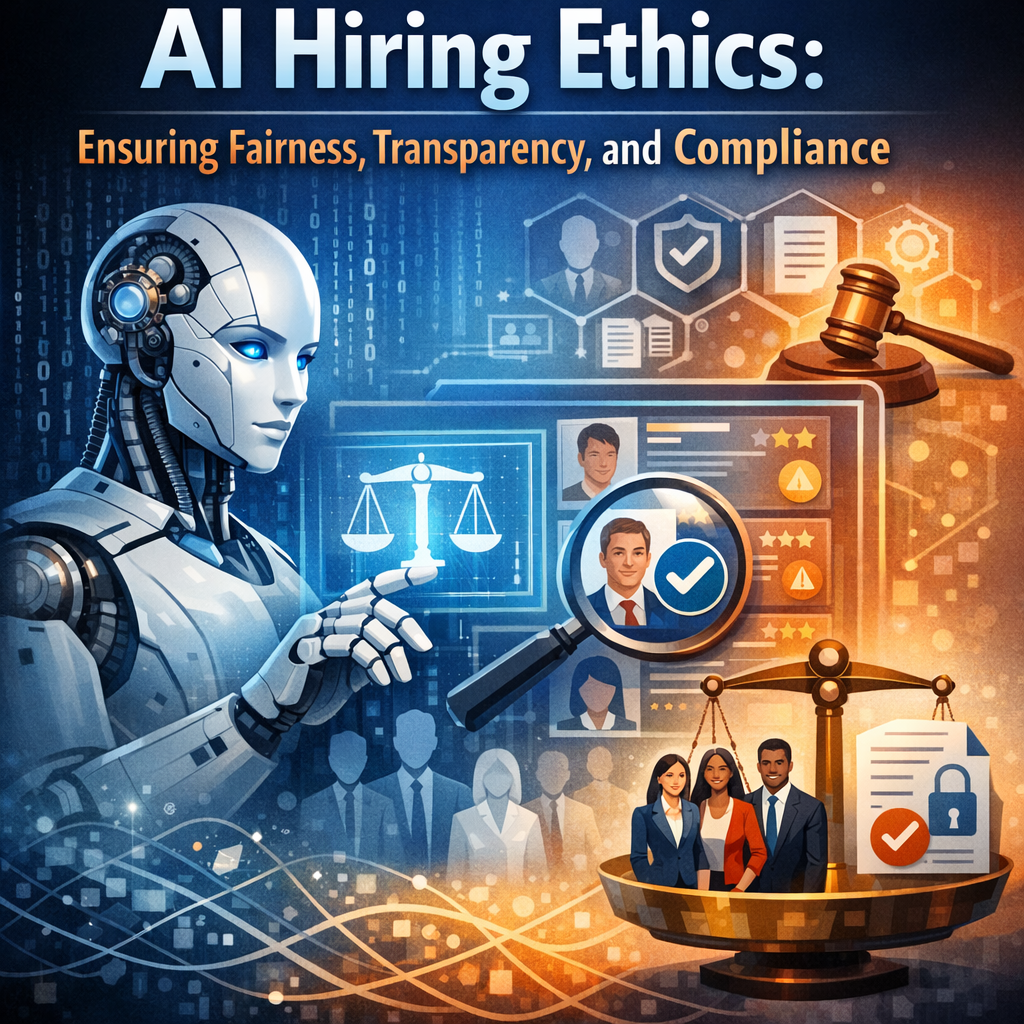
AI Hiring Ethics: Ensuring Fairness, Transparency, and Compliance
The Ethics of AI in Hiring: Fairness, Transparency, and Compliance
Artificial intelligence is changing how employers find, screen, and assess candidates. Hiring tools can sort résumés, schedule interviews, analyze assessments, and help recruiters manage large applicant pools. Used carefully, they may make parts of recruitment more efficient. Used without oversight, they can reinforce discrimination, obscure important decisions, and expose employers to legal and reputational risks.
Ethical AI in hiring is not simply a matter of choosing a sophisticated tool. It requires employers to understand how a system works, evaluate its effects, and keep people accountable for the decisions it supports.
How AI Can Affect Hiring Decisions
AI hiring tools learn patterns from data or apply rules designed by their developers. Those patterns may reflect past hiring practices. If historical data favored certain schools, career paths, locations, or demographic groups, a system trained on that data could continue to disadvantage candidates who do not fit the pattern.

Bias can also arise from seemingly neutral features. A tool might evaluate employment gaps, language patterns, facial movements, or responses to an assessment. These measures may have little connection to job performance, and they can affect people differently because of disability, culture, caregiving responsibilities, or access to technology.
The risk is not limited to automated decisions. Even when a recruiter makes the final choice, an algorithm’s score or recommendation can strongly influence what receives attention. Human review is meaningful only when reviewers understand the tool’s limits and can challenge its output.
Building Fairness Into AI in Hiring
Fairness should be assessed in relation to the specific role and the people applying for it. Employers can start by asking whether a tool measures skills that are genuinely relevant to the job. If a system scores candidates on a proxy that is not needed for successful performance, the employer should reconsider using it.
A practical fairness process includes:
- Reviewing the data: Understand where training and evaluation data came from and whether it represents the candidate population.
- Testing outcomes: Compare selection rates and error patterns across relevant groups, where legally appropriate and supported by reliable data.
- Checking accessibility: Make sure candidates with disabilities can participate and request reasonable accommodations.
- Reassessing regularly: Monitor the tool after deployment, since applicant pools, roles, and system performance can change.
- Providing alternatives: Offer a reasonable way to complete assessments when a digital process creates an access barrier.
A vendor’s claim that a tool is “bias-free” should not replace independent evaluation. Employers remain responsible for understanding how their hiring process affects applicants, even when an outside company supplies the technology.
Making Automated Decisions More Transparent
Candidates should be able to understand when AI is being used and what role it plays. Clear notices can explain which steps involve automated tools, what kinds of information are considered, and how applicants can request an accommodation or raise a concern.
Transparency also matters inside the organization. Recruiters and hiring managers need practical explanations of what a system can and cannot do. A score should not be treated as an objective measure of a person’s potential unless it has been validated for that purpose. Employers should also document why they use the tool, who reviews its recommendations, and how decisions can be challenged.
Meaningful human oversight means more than approving an algorithm’s result. Reviewers need the authority, time, and information to question recommendations and consider relevant evidence the system may have missed.
Meeting Legal and Compliance Responsibilities
Rules governing AI and employment vary by jurisdiction and continue to evolve. Employers may need to consider anti-discrimination laws, privacy and data-protection requirements, accessibility obligations, recordkeeping rules, and regulations specifically addressing automated employment tools. Some jurisdictions require advance notice, bias audits, or disclosures.
Before adopting a system, employers should identify the laws that apply to their locations and workforce. They should also ask vendors for documentation about the tool’s purpose, data practices, testing, limitations, and updates. Contracts can clarify responsibilities for security, audit access, incident reporting, and changes to the system.
Because requirements differ and may change, organizations should involve qualified legal and human-resources professionals when evaluating tools and setting procedures.
A Responsible Path Forward
Ethical AI in hiring depends on ongoing governance, not a one-time review. Employers should assign clear responsibility for each tool, keep records of evaluations, train staff, and establish a process for investigating complaints or unexpected outcomes. They should also be willing to pause or stop using a system when evidence shows that it is unreliable, inaccessible, or unfair.
AI can support recruitment, but it should not replace careful judgment or accountability. By testing for disparate effects, communicating clearly with applicants, and complying with applicable laws, employers can use AI in hiring more responsibly—and make decisions that are both efficient and worthy of candidates’ trust.