
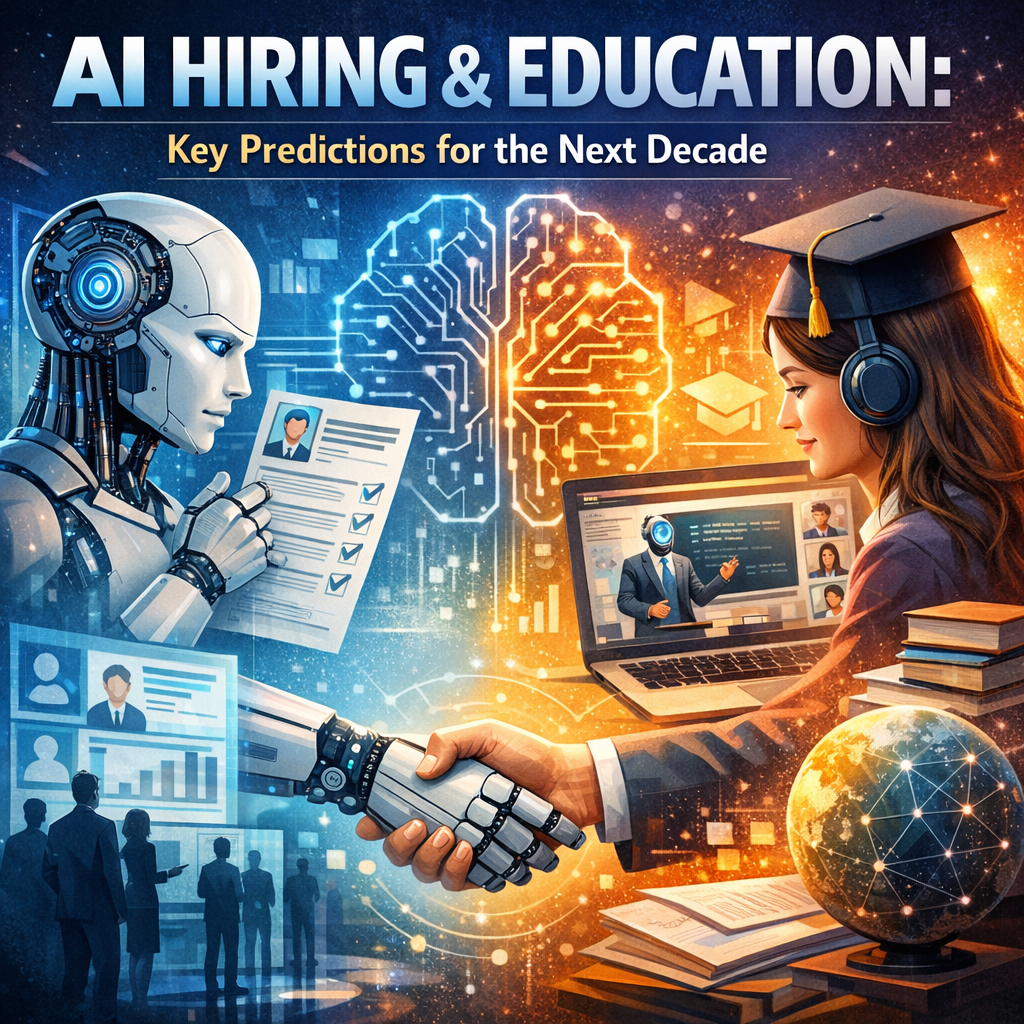
AI Hiring and Education: Key Predictions for the Next Decade
The State of AI Hiring and Education: Key Predictions for the Next Decade
Artificial intelligence is changing how employers find talent and how people prepare for work. Over the next decade, these shifts are likely to become more connected: hiring systems will influence what skills people learn, while education providers will adapt to the needs of changing workplaces.
The future of AI hiring and education will not be shaped by technology alone. It will also depend on regulation, public trust, and decisions made by employers, schools, and governments.
AI Hiring Will Become More Common—and More Scrutinized
Employers already use AI tools to sort applications, schedule interviews, and analyze workforce needs. These systems can help teams handle large volumes of work, but they also raise questions about accuracy, privacy, and fairness.

In the coming years, AI may support more parts of the hiring process, including matching candidates to roles based on skills rather than job titles. This could help people with nontraditional career paths get noticed. However, automated screening may also repeat patterns in historical hiring data, disadvantaging some applicants if it is not carefully tested.
Human Oversight Will Matter
A likely direction is not fully automated hiring, but human-led decisions supported by AI. Employers may use software to summarize applications or identify relevant experience, while trained staff remain responsible for evaluating candidates and making final choices.
Organizations will also face growing pressure to explain how hiring tools work. Depending on where they operate, laws and guidance may require audits, candidate notices, or other safeguards. Clear policies can help applicants understand when AI is involved and how to request a human review.
Skills May Matter More Than Credentials Alone
As AI changes tasks within many jobs, employers may place greater emphasis on what candidates can do rather than where they studied. Degrees and professional qualifications will continue to matter in many fields, particularly where formal accreditation is essential. But portfolios, practical assessments, and verified work experience may become more influential in other roles.
This shift could make hiring more accessible to people who learned through apprenticeships, online courses, community programs, or experience on the job. It could also create new challenges: skills assessments need to be relevant, consistent, and accessible to candidates with different backgrounds.
Employers may increasingly look for a combination of technical and human capabilities, such as:
- AI literacy and the ability to check AI-generated output
- Communication, collaboration, and sound judgment
- Adaptability and continuous learning
- Role-specific expertise and practical problem-solving
Education Will Move Toward Lifelong Learning
The traditional model of completing education early in life and relying on it for an entire career is already changing. As tools and job requirements evolve, workers will need opportunities to update their skills throughout their careers.
Schools, colleges, and universities may expand short courses, certificates, and work-based learning. Employers could also invest more in internal training, especially when new tools change the responsibilities of existing roles. The strongest programs will teach not only how to use AI, but also when its outputs need to be challenged.
AI Tutors Will Support—Not Replace—Teachers
AI-powered tutors can provide practice questions, explain concepts in different ways, and give students immediate feedback. These tools may help make learning more personalized and available outside the classroom.
Still, access to technology does not guarantee a good education. Students need guidance on evaluating information, protecting personal data, and using AI honestly. Teachers remain central to motivation, discussion, and social development—areas that automated systems cannot fully reproduce. Schools will need clear rules that encourage useful assistance without obscuring a student’s own understanding.
Access and Accountability Will Shape Outcomes
AI could widen opportunity by reducing barriers to training and helping employers recognize skills beyond traditional credentials. It could also deepen inequality if high-quality tools and learning programs remain available mainly to well-resourced schools, companies, and individuals.
The next decade will therefore require attention to who benefits and who may be left out. Employers and educators should test systems for bias, provide accessible alternatives, and protect sensitive data. Workers should be able to understand how their information is used and how automated decisions affect them.
Preparing for a Changing Relationship Between Work and Learning
The most important prediction is that hiring and education will become more closely linked. Employers will communicate skill needs more frequently, and educators will adjust programs in response. Workers, in turn, will be expected to keep learning as roles evolve.
AI will not make every hiring decision fair or every classroom more effective by itself. Its impact will depend on thoughtful design and responsible use. Organizations that combine useful technology with human judgment, transparent standards, and accessible learning are more likely to build a workforce prepared for the decade ahead.