

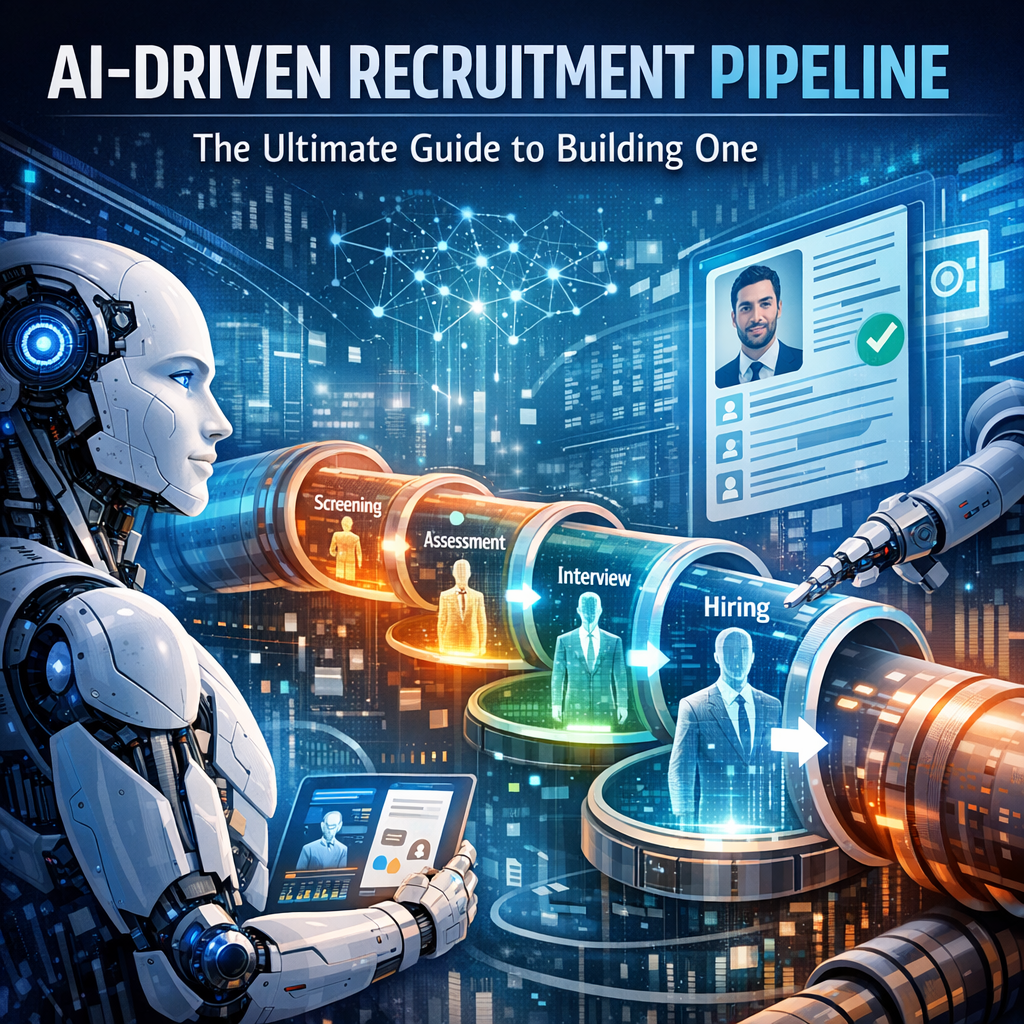
AI-Driven Recruitment Pipeline: The Ultimate Guide to Building One
The Ultimate Guide to Building an AI-Driven Recruitment Pipeline
Recruiting teams face a constant balancing act: move quickly, reach qualified candidates, and give every applicant a fair, respectful experience. An AI-driven recruitment pipeline can help by automating repetitive work and surfacing useful insights. But successful implementation takes more than choosing a tool. It requires clear goals, reliable data, human oversight, and thoughtful communication.
1. Start With a Specific Hiring Problem
Before evaluating software, identify where your current process slows down or creates friction. You might be receiving too many unqualified applications, struggling to find specialized talent, or losing candidates between interviews.
Map the stages of your existing pipeline, from workforce planning through onboarding. For each stage, note:

- Who is responsible
- How long the step usually takes
- Where candidates drop out
- Which tasks are repetitive
- What information hiring teams need to make decisions
Choose one or two measurable problems to address first. For example, you could aim to reduce time spent on initial resume reviews or improve interview scheduling speed. Starting with a focused pilot makes results easier to evaluate.
2. Design the Pipeline Around Hiring Needs
AI works best when it supports a well-defined process. Start by agreeing on the role’s essential requirements and how candidates will be evaluated. Separate genuine must-haves from preferences, and connect each requirement to job-related evidence.
A practical AI-driven recruitment pipeline might include:
- Workforce planning and role approval
- Job description development
- Candidate sourcing
- Application screening
- Interview coordination and evaluation
- Offer management
- Onboarding and follow-up
Decide which steps can be automated and which require direct human judgment. Scheduling reminders, organizing applications, and summarizing interview notes may be suitable for automation. Final selection decisions should remain accountable to qualified people.
3. Choose Tools Carefully
Recruitment technology can range from AI features built into an applicant tracking system to specialized sourcing, assessment, and interview platforms. Evaluate tools against your actual workflow rather than adopting them because they promise faster hiring.
Ask vendors how their products:
- Use and store candidate data
- Generate or rank recommendations
- Handle missing or inconsistent information
- Allow recruiters to review and correct outputs
- Support accessibility and accommodation needs
- Document decisions for auditing
Look for tools that integrate with your existing systems and provide understandable results. A score without a clear explanation can create misplaced confidence, especially when applicants have varied career paths or nontraditional experience.
4. Prepare Data and Job Criteria
AI tools are influenced by the information they receive. Outdated job descriptions, inconsistent application forms, and historical hiring patterns can lead to poor recommendations. Review your data before relying on automated analysis.
Use current, inclusive job descriptions with clear responsibilities and requirements. Check whether your application process asks for information that is genuinely needed. If the system learns from past hiring outcomes, examine those outcomes for patterns that could reproduce unfair preferences.
Treat AI-generated matches as prompts for review, not as objective measures of a person’s potential. Candidates may demonstrate skills through transferable experience, projects, training, or career breaks that a narrow screening model could overlook.
5. Build in Human Oversight and Fairness Checks
A responsible pipeline makes it clear who reviews AI outputs and who is accountable for decisions. Recruiters should be able to challenge recommendations, correct errors, and consider context that automated systems cannot reliably capture.
Before launch, test the system using realistic applications and different candidate profiles. During use, monitor results for unexpected disparities across relevant groups, where lawful and appropriate. Review both outcomes and process: who advances, how long decisions take, and whether candidates receive consistent treatment.
Provide candidates with clear information about how AI is used in the hiring process. Offer an accessible way to request accommodations or raise concerns. Transparency helps build trust and gives people a way to address errors.
6. Measure What Matters
Track a small set of indicators tied to your original goals. Useful measures may include:
- Time to complete each hiring stage
- Recruiter hours spent on administrative work
- Candidate withdrawal and completion rates
- Hiring manager satisfaction
- Offer acceptance rates
- Selection outcomes and potential disparities
Compare results with a reliable baseline, and account for changes in role difficulty or applicant volume. Faster processing is not necessarily better if candidate experience or decision quality declines. Review metrics regularly and investigate unexpected patterns rather than relying on a single overall score.
7. Improve the Pipeline Continuously
An AI-driven recruitment pipeline is not a one-time installation. Hiring needs, regulations, tools, and candidate expectations change. Assign owners to review system performance, update job criteria, and gather feedback from recruiters, hiring managers, and candidates.
Begin with a limited pilot, document what works, and expand only when the process is dependable. The strongest pipeline combines automation for routine tasks with human judgment for decisions that affect people’s careers. Used thoughtfully, AI can help teams spend less time managing paperwork and more time recognizing talent.